
STS 10: Elusive as ever
Just as congestion and delays at the port of Santos in Brazil, South America’s largest facility for
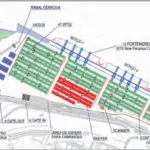
containers, go into overdrive, the likely cure for the mess – the US$1.29 billion STS 10 Santos
new terminal – seems to be further away than ever. Rob Ward reports
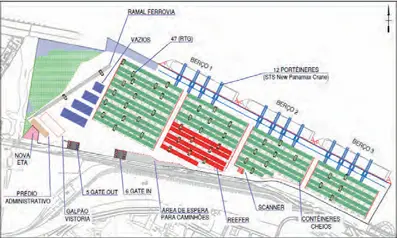
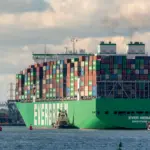
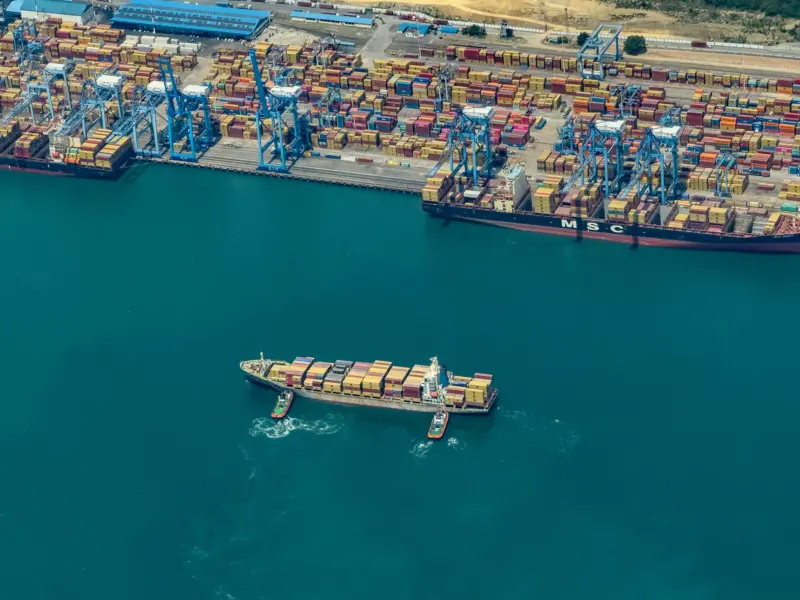
As one Brazil watcher said of the high-profile STS 10 container terminal tender, “there have been more twists and turns in this saga than you’d see from an Olympic ice skater.” As PS went to press, Santos Shipagents Association (Sindamar)was reporting costly two-to-three day delays for box ships and from 10 to 20 days for bulk vessels.
Regular readers of Port Strategy will know that MSC and Maersk appealed against a decision to prevent them from participating in the first round of bidding for the new high-capacity terminal. Government officials thinking was to reduce the possibility of further concentration of the market and bring in new operators – and that seems to have worked as the various government bodies involved in the process are now “reconsidering” the original edict.
Aside from the two shipping giants, the other runners and riders have included ICTSI, Cosco, China Port Holdings (who operate a terminal in Paranagua, south Brazil), Port of Singapore and JBS Ports (a new Brazilian port operator in Itajai and part of the JBS meatpacking group).
However, the constant delays and several “political factors” have meant that JBS and Cosco are getting cold feet and may pull out. Pressure from Donald Trump and the American government for Brasilia NOT to allow Chinese companies to operate “key infrastructure” is putting off Cosco and may eventually affect CPH as well.
One totally new “interested party” is Abu Dhabi Ports Group which recently bought Brazilian agri-bulk terminal company CLI and two terminals for $835 million — the largest acquisition in its history. The CLI Sul sugar terminal in Santos (CLI Norte is in in Itaqui) was cleared for purchase by both Antaq (the maritime transport regulator) and CADE (the national Anti-trust body). Since then AD Ports has declared an interest in STS 10. DP World, also based in the UAE, has a box terminal in Santos but is not allowed to bid because it already owns a container facility in the port.
“It seems that, once again, those parties unhappy with the process as laid out – on this occasion MSC and Maersk – have managed to delay the tender for long enough to overlap another Presidential election, hoping that their flag will flutter stronger under a Bolsonaro government,” said one Sao Paulo based shipping agent who did not wish to be named for fear of losing business. “CADE, Antaq and most voices in the Ministry of Ports would like to see a fresh face winner for STS 10 but that might not happen now.”
The Ministry of Ports set a mid-October deadline for completion of a “working group re-evaluation” but no progress was made. Last December Brazil’s Federal Court of Accounts (TCU) recommended holding the Tecon Santos 10 auction in two stages, barring MSC and Maersk from the first round, but President Lula’s Chief of Staff Office (Casa Civil) began to back an open auction for all. It now looks likely that the delay will move into the New Year when a new Minister of Ports will probably be appointed; no matter who wins the Presidential election; either Flavio Bolsonaro or the incumbent President Lula.
BTP SPECULATION
Many Brazil port watchers are intrigued as to how the “split up” of BTP – the current joint terminal operation by Maersk and MSC – will be carried out, with the official line being that both Maersk and MSC will bid and whoever wins will sell their 50% share in BTP. The terminal is Santos’s second biggest volume box terminal with 1.98M TEU (a 34.4% market share) handled in 2025. Santos Brasil (owned by CMA CGM) is biggest with 43%.
However, some reports, emanating from reliable sources, are suggesting that Maersk might buy out the 50% share of MSC before the tender goes ahead, leaving the path clear for an MSC win. Sources at Maersk have, seemingly, denied this possibility and, as our Sao Paulo source says: “If that happens and MSC lose the tender they will be left with nothing in Santos, so not so sure about this.”
Other informed commentators on the “3D chess” seemingly being played out in Santos and Brasilia suggest that Maersk is clearly laying out a Plan B, if Plan A – winning STS 10 – doesn’t work out.
PLAN B OPTIONS
“Maersk are now showing an open interest in other developments in Brazil such as in Paranagua and Sao Sebastiao [in Sao Paulo state like Santos and just 160 km east from the port of Santos] ,” said Robert Grantham, a director and founder of Solve shipping consultancy. “I think this is very much a Plan B back-up idea in case they don’t win STS 10. There is space on a greenfield, deepwater site on the outskirts of Paranagua for a second terminal [to compete with TCP] and Sao Sebastiao could provide some interesting transshipment options for them.”
All this intrigue comes against a background of Brazil’s, and especially Santos’s, dire need for more capacity.
Jose Roque, the Executive-Director for Sindamar has been on the warpath of late, lamenting the fact that ships queuing for berths are facing longer and longer delays.
“These delays are especially expensive for container ships, with daily delay costs ranging from $60,000 to $100,000, depending on the vessel’s length. Schedules are disrupted and the vessels entire itinerary is badly affected and that has a cascading effect on several other vessels. We desperately need more capacity such as STS 10,” he underlines.

Related Articles
 CONCESSIONS & INVESTMENTS
 CONCESSIONS & INVESTMENTS
 CONCESSIONS & INVESTMENTS