


How resilient is your port to the next major disruption?
Geopolitical uncertainty, extreme weather, congestion, infrastructure failures and inland transport bottlenecks are increasing pressure on ports and the wider logistics networks they support. And when disruption occurs at one critical gateway, its impact can quickly spread across road, rail and hinterland connections.
 Content from our commercial partners
The challenge for ports is no longer simply having a contingency plan. It is understanding where the network is vulnerable, how disruption could spread and which actions will keep critical cargo moving.
Lloyd’s Register Advisory’s Ports Supply Chain Resilience service helps ports, terminal operators and authorities turn resilience planning into practical action.
We help organisations:
- Identify critical vulnerabilities and dependencies across sea, air, road, rail and inland logistics networks
- Stress-test operating models against realistic disruption scenarios
- Assess alternative gateways and routes, comparing capacity, cost, service and risk
- Protect critical cargo flows through prioritisation and continuity planning
- Establish clear diversion triggers and crisis governance
- Plan resilient infrastructure and logistics corridors that reduce longer-term exposure to individual chokepoints
From immediate response to long-term resilience
When disruption occurs, LR can support rapid assessment, alternative routing, cargo prioritisation, control-tower decision support and practical 30–60–90 day continuity planning.
Over the longer term, we help ports consider corridor diversification, dry ports and inland logistics hubs, rail-connected freight nodes, strategic stockholding, infrastructure investment and appropriate governance.
The aim is simple: keep trade moving today while creating a more resilient network for tomorrow.
Read the article: Rethinking Port Resilience | LR
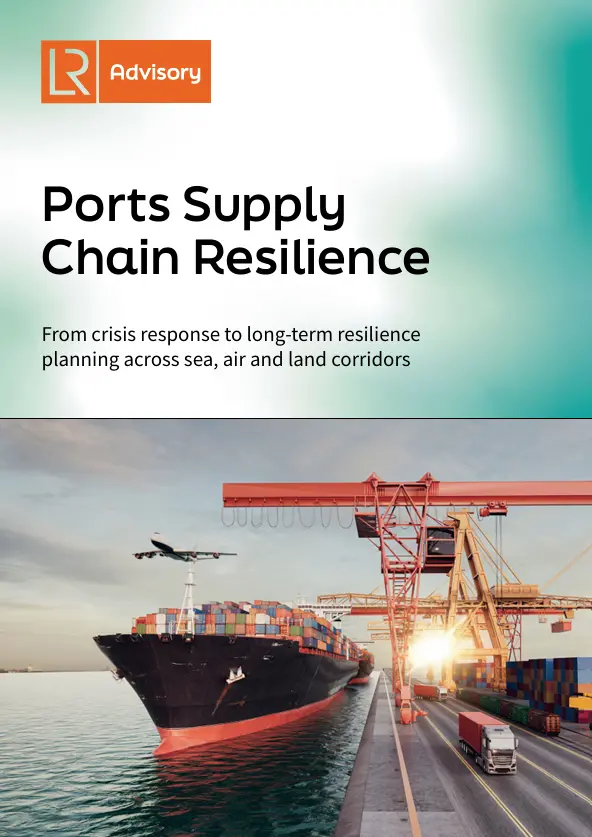 Ports Supply Chain Resilience
Lloyd’s Register (LR) Advisory helps organisations assess supply chain vulnerabilities and plan practical responses to disruption.
Download | PDF 1.09MB
Fuel for Thought: Ports
As vessel fuel choices change, ports face difficult decisions about infrastructure, safety, energy supply and investment. LR’s new Fuel for Thought: Ports research report explores LNG, methanol, ammonia, hydrogen, biofuels and nuclear, and what their development means for port readiness and investment.
The research specifically covers future fuel demand, port infrastructure readiness, bunkering, utility and energy requirements, future-proofing investment, fuel supply chains, energy ecosystems and the port business case.
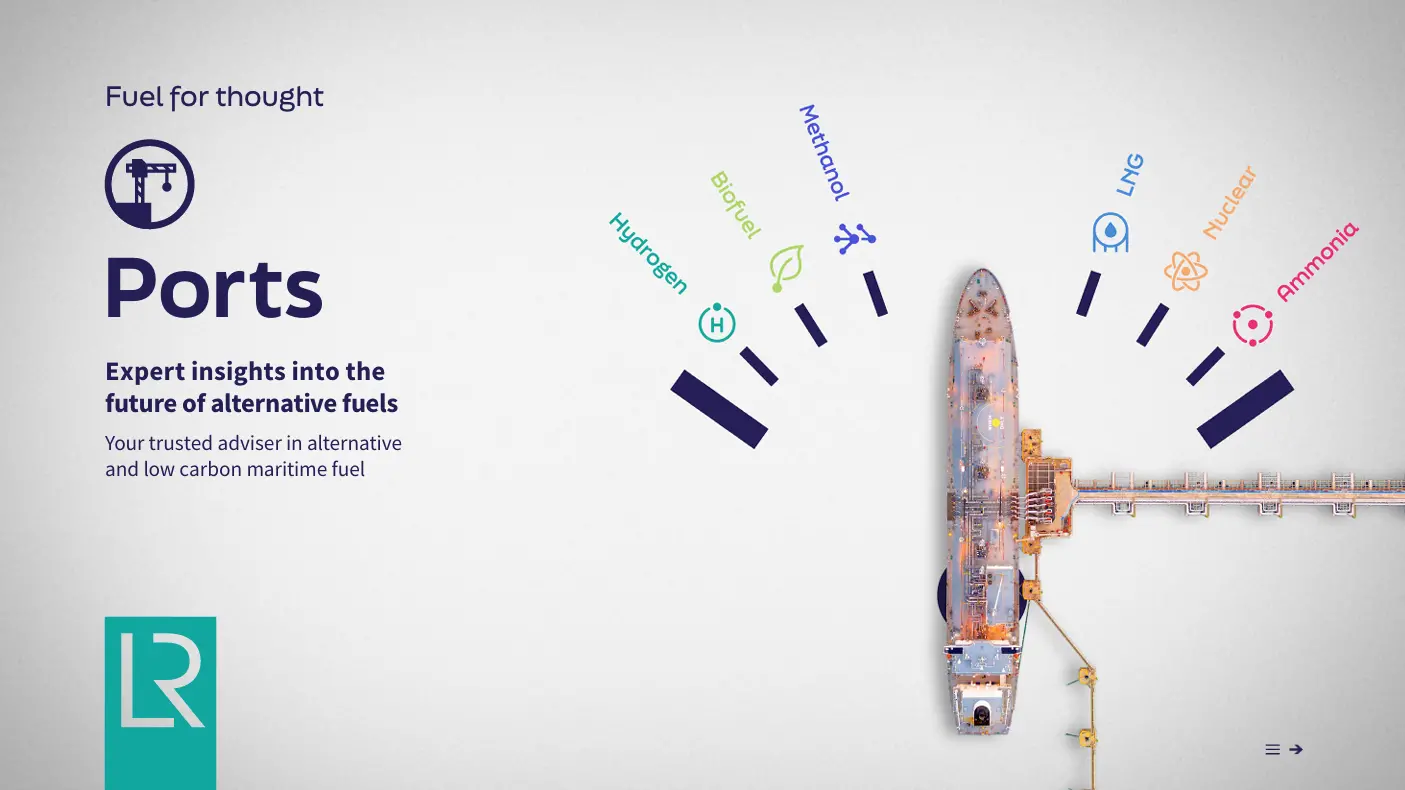 Fuel for Thought: Ports
The move to new alternative fuels in shipping is underway.
Download | PDF 6.96MB
Advanced nuclear technology use within port environments
Advanced nuclear technologies are moving from theoretical discussion towards practical consideration across ports and the wider maritime sector. A new joint report from British Ports Association and Lloyd’s Register explores what that could mean for port leaders, harbour authorities, terminal operators and policymakers.
The opportunity extends well beyond accommodating nuclear-powered vessels. Advanced nuclear could potentially provide reliable, low-carbon power for port estates and shore power, support industrial heat and hydrogen or synthetic fuel production, enable resilient microgrids and create new opportunities for specialist maritime services and supply chains.
The report argues that ports should consider nuclear as a long-term infrastructure and operating-model question, not simply another future fuel, and that preparation can begin now through stakeholder engagement, evidence-building, regulatory engagement and integration into existing port safety-management approaches.
 Advanced nuclear technology use within port environments
This paper sets out what advanced nuclear might mean in and around ports. It is intended as a briefing for port leaders, harbour authorities, terminal operators and policymakers.
Download | PDF 2.96MB
About Lloyd’s Register Advisory
New and evolving challenges, including tightening regulations, sustainability concerns, and tougher competition, offer maritime and energy businesses novel opportunities.
Seizing these opportunities requires a robust business strategy to inform investment decisions and achieve operational excellence. LR has the ideas, technical expertise and passion to shape your business performance as part of a safer, more sustainable and more prosperous global economy.
With unparalleled technical and commercial expertise and insights into thought leadership, LR understands your world like nobody else. We work across the maritime and energy sectors, tailoring solutions to your specific challenges and goals.
 Website
 LinkedIn
 Instagram
 X
 Facebook
Related Articles
 OTHER NEWS
 OTHER NEWS
 EQUIPMENT