





Seattle adopts sustainability priorities
The Port of Seattle Commission has further committed to electrification as it outlined its sustainability priorities for 2019.
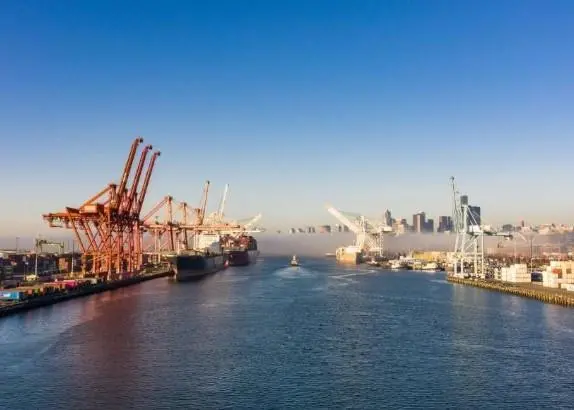
At its meeting on 23 April, the Commission adopted its workplan for the Energy and Sustainability Committee. It confirmed five focus areas including delivering a Sustainable Project Framework Resolution; developing the port’s Waterfront Clean Energy Strategic Plan; developing the Maritime Blue Maritime Inspiration Awards; incorporating environmental stewardship into the new cruise facility; and advancing the Sustainable Aviation Fuels Strategy.
Port of Seattle commissioner Ryan Calkins said: “The Port and its partners are making sustainability a better operational choice by making it easier and less expensive to implement and they are not taking no for an answer when facing operational or regulatory hurdles.
“We need to make system-wide change to achieve our goals of bringing clean power to Seattle’s waterfront and helping all of our industries transition to cleaner fuel.”
Strategic partners
The port’s Waterfront Clean Energy Strategic Plan involves identifying strategic partners for the evaluation of alternative ways to cost-effectively electrify Terminals 66, 46 and 5. Electrification would enable ships to turn off their engines thereby reducing pollution while at the dock.
A Sustainable Project Framework Resolution aims to enable the Commission to transparently evaluate alternative environmental approaches presented by staff when seeking authorisation to design and build capital projects.
Solar panels
The port has also unveiled its latest solar panel installation on top of its headquarters at Pier 69.
Jointly funded by the port and a grant from the Washington State Department of Commerce, the project took several months in which 390 ITEK monocrystalline solar panels were installed, allowing the photovoltaic system to generate over 127,000kWh annually, to offset greenhouse gas emissions by 1.8mt of carbon dioxide.
Solar panels were installed as a pilot program in late 2017 on top of Net Shed 5 at Fishermen’s Terminal.
For Port-owned emission sources, the goal is to reduce greenhouse gas emissions 15% by 2020, 50% by 2030 and be carbon-neutral or negative by 2050 compared to 2005.
Related Articles
 ALTERNATIVE FUELS GREENPORT
 OPERATIONS
 ALTERNATIVE FUELS GREENPORT