


Outside influences
Grain ports battle the weather, the economy, and industrial action to move this invaluable cargo. John Bensalhia reports
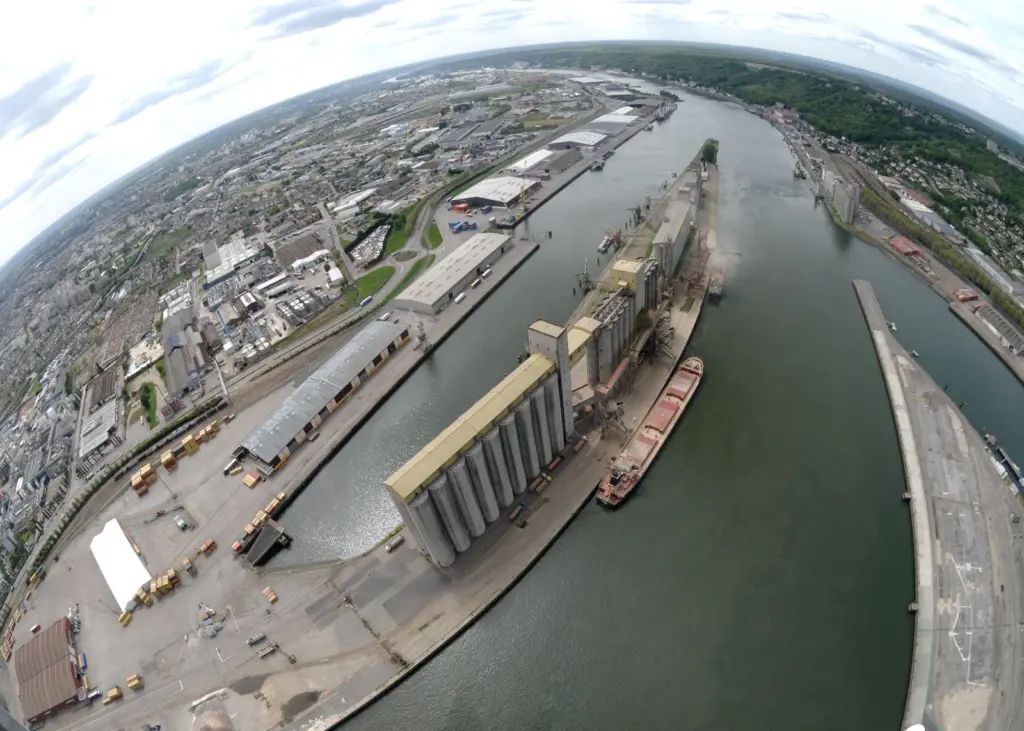
Sometimes, a simple thing such as going to work can seem like the hardest prospect in the world. Supposing that you have to commute in to work on the train – easy in principle, but occasionally, in practice, it’s a tall order.
The mission of getting into work has now been taken out of your control – it can be due to unions going on strike, reducing or completely cancelling trains coming and going. It can also be due to adverse weather conditions, a common issue whatever the weather. Boiling hot summer’s day? Speed restrictions owing to heat on the rails. Heavy rainfall? Risk of flooding, causing cancellations. And as for the snow – well, commuters would be better advised staying indoors and working from home in at least five layers of clothing.
A simple mission can sometimes become a hard task, simply because it is affected by outside influences. In the port world, and especially in the grain sector, it can occasionally be a similar story. Sometimes, the simple task of exporting grain supplies can become a challenge owing to issues that are beyond the port operator’s control.
Martin Butruille, commercial manager of the Port Of Rouen, says that there are two main issues for grain ports: “For a grain port, the two main issues are to be competitive price-wise and reliable for the calls of ships, together with pilot age, tugs, and at the same time, to have availability of quays with a real good productivity in loading the ships with grain.”
Outside chance
However, that reliability can be put to the test by outside influences. The Port Of Rosario, for example, was affected recently by a week-long strike instigated by farmers who were protesting against two recent developments – agricultural policies implemented by the national government, and a recent tax growth affecting wheat and corn exports. President Cristina Fernandez had imposed the tax increase, which would affect farmers’ profits. This was understandably grave news for the Argentinian port, especially bearing in mind its status as a top exporter of soyoil (used for international biofuels) and as a top supplier of soymeal, used as cattle feed (for example, in China).
The strikes had a visible effect on the export of grain at the Port of Rosario. As an example, on one day, only 881 trucks entered the port, which, when compared with the same day one year previous, meant a huge drop of 3,800. In addition to the farmers’ strike, there was further threat of a two-day strike from Argentina’s riverboat pilots, demanding more working hours. However, government intervention meant that the planned strike was called off – President Fernandez is said to be taking a firmer stance on grain strikes, because grain exports are a vital source of national income.
Danielle Okrusko, research analyst for the Port Of Churchill, stresses the importance of this product: “Grain is one of Canada’s golden exports as it is a fundamental and universal good shipped all over the world.”
The economic situation is one that is on many minds – the economic climate in Argentina, for example, has been affected by both slower demand from its main trade partner, Brazil, and of course, from financial problems faced by many European countries.
So, grain ports must also bear in mind a number of economic issues, as Mr Butruille points out: “Firstly, grain ports should have a low oncarriage price for the grain from the hinterland – Road transportation for the nearest producers and waterways or train beyond 200 km. Secondly, they should have good competitiveness from the truck to the ship (fobbing), including storage. And thirdly, as mentioned, they should have a good productivity in loading the ships and good overall conditions. The revenues of Port Authorities are the Harbour dues, but one must consider a port as a group of various professionals involved in the ship’s operations.”
The weatherman says
But perhaps one of the greatest challenges faced by grain ports is that of adverse weather conditions. The Port of Churchill comments: “Grain is a volume driven business; as long as there is grain, ports can ship it. Severe weather conditions such as flooding, drought, or frost can threaten production and affect available volume to be exported through ports around the world.”
Recent worldwide reports have demonstrated the fallout from adverse weather conditions for grain ports. The Port of Novorossiysk is one of the main grain export ports in Russia, and in July 2012, it was put to the test by the extreme weather. The port has two terminals that are connected to wheat fields north of the Caucasus mountain foothills by a lone rail link and mountain roads. Because of the floods in Russia’s Black Sea coast, the flow of rail traffic to the port had been called to a halt as a result of a broken bridge south west of Krymsk, an area that had been particularly badly hit by the flooding (the floods caused the loss of 171 lives).
Russia has experienced a number of extreme weather conditions, including an unusually warm start to the Winter season, a drought in the Spring, and then, the heavy rain. With that in mind, the country’s Agriculture Ministry had to lower predicted levels of wheat production and export for the 2012/2013 year (wheat crop forecasts dropped from 57m to 46m-49m tonnes while export forecast was reduced from 20m to 16m-18m tonnes).
“Weather conditions such as rain or snow can add additional steps to the transportation of grain due to the exposure of humidity, a quality which grain is measured by,“ says the Port of Churchill. “As grain is loaded or transported through port facilities it may be vulnerable to external weather conditions which make it difficult to keep grain at a desired humidity level. If grain is exposed to humidity it could increase risk of spoilage, damage, or fire of the grain, additional steps such as drying grain is both time consuming and costly to ports and importers.”
Droughts in America, the worst since 1956, also affected global grain trade – the US Department of Agriculture said that it now predicted a 4.9% dip in the global trade of grain for the 2012/2013 year. The demand for supramax commodity carriers was also reduced because of the droughts – the Baltic Exchange claimed that the owners of the supramax carriers have seen earnings drop 11% to $10,945 a day this year – the average rates of $10,324 were the worst since 2005. In addition, the supramax rates for cargoes from the Gulf Of Mexico were also lower than normal, with a drop of more than 10% in July. Corn levels inspected for loading at American ports in the last marketing year dropped 14%, while wheat levels dipped by 21%. There were also reductions in the levels of soybeans, barley and sorghum.
Like it or not, outside influences can and will affect grain ports – the key is for management to be as best prepared for any potential eventualities. “Grain ports must have good crops in quantity and quality, and to have good storage capacities in the hinterland and in the port,” says Mr Butruille.
The Port of Churchill concludes: “It is important port employees and managers acknowledge weather conditions as a potential threat to successful grain transportation and minimise these risks by maintaining proper controls and management principles in place.”
Related Articles
 NEWS
NEWS
 CONTAINER & CARGO HANDLING
 OPERATIONS