




US demand stabilises container prices
The steady demand for US-bound shipments is keeping container prices from crashing, says market analyst, Container xChange.
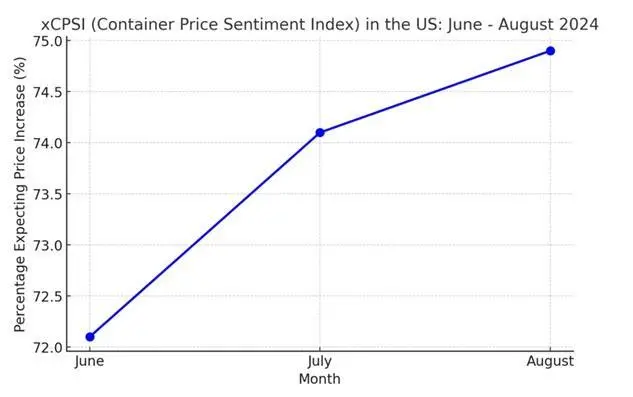
Since May 2024, average container prices have shown a small yet consistent upward trend, rising from US$1468 in June to US$1534 in July, and reaching US$1582 in August.
“As we look ahead, the key question remains – how will freight rates and container prices evolve over the next 3 to 6 months?” he said.
“Ongoing disruptions in the Red Sea, for example, continue to absorb capacity, with no clear resolution in sight.
“This means containers are spending more time in transit, requiring more containers to handle the same amount of freight, which supports higher rates.”
The picture is far from certain as a potential increase in capacity and economic turbulence may cause rates to soften.
“There are strong arguments for rates to decline in the coming months,” said Roeleffs. “The year is shaping up to be one of the strongest years for container production on record. As the same is true for new vessel deliveries, these capacity injections could lead to oversupply despite ongoing disruptions.
“There’s also uncertainty around the US economy, with pressure to cut interest rates at a relatively fast pace due to looming challenges in the labour market. If the economy slows, we may not see the continued demand growth needed to support current freight rates.”
“Moreover, new entrants on trans-Pacific routes could trigger a price war, which may extend to other trade lanes, putting further downward pressure on rates.”
These broader factors play a key role in shaping the global container market, as are disruptions such as looming industrial action at Canadian railways and US East and Gulf Coast ports.
“The economic outlook remains cautious, with inflation expectations easing slightly but still weighing on consumer sentiment,” said Roeleffs.
“The upcoming US election could further impact consumer sentiment, leading to fluctuations in import demand.
“For the logistics industry, this means preparing for potential swings in container volumes, which will require more flexible supply chain strategies.”
Related Articles
 OPERATIONS
 OPERATIONS
 OPERATIONS