




Trust the data
After making its mark in marine insurance, Concirrus is looking at the port and terminal sector where it is confident it can also help insurers improve their loss ratios. Felicity Landon reports
Concirrus says its big data and machine learning platform, Quest, has helped marine insurers improve their loss ratios by seven per cent. Now it is turning its attention to the ports and terminals sector, where it says insurers could also enhance their profitability.
Andrew Yeoman, Concirrus Founder and CEO, says he knew almost nothing about shipping when he decided to target the marine insurance sector in 2017; but he and his team did know a lot about data and technology. Within two years, he was voted the second most influential person worldwide in marine insurance. To date, Concirrus has sold its Quest Marine service to about 30 underwriters, brokers and P&I Clubs.
“Concirrus has been in business since 2012 but before 2017 we were a completely different company,” says Yeoman. “Late 2016 we were doing things like monitoring airports, and monitoring coffee machines to keep them working. A customer asked – had we ever considered doing what we did but in insurance, and specifically in shipping. I spoke to the market and developed Quest.”
He says Quest is similar in principle to black box, or telematics, insurance for cars: “We monitor how, where and when a vessel is used and combine this with who owns it, information about which ports it visits, whether there have been port inspections, what cargo it carries, etc. Then we make judgments on those movements, the utilisation of the vessel, etc., for the insurers to decide if they are going to insure it and, if they are, what price should be paid.
UNDERSTANDING DATA KEY
There is, of course, no black box installation, but Concirrus takes in 170GB of wide-ranging data a day “millions and millions of records of data”, says Yeoman. “The secret is not having access to data but being able to understand it and break it down. For example, when a broker sends an email with a bunch of attachments – schedule of risk, historical claims, etc., our system will read and rate everything automatically. It takes 15 seconds to assess it all.”
Quest accesses and interprets the data, combining this with historical claims information to reveal behaviours and patterns that correlate to claims.
Concirrus targeted marine insurance because “it seemed obvious that the market had operated the same way for 300 years and wasn’t taking advantage of this wealth of data available”, says Yeoman. “We challenge the traditional method of insurance, which rates vessels on age, type, class, tonnage, where built, flag, etc. We look at factors around the ship’s behaviour. We are helping insurers make money out of marine insurance – not just by raising prices, but by selecting risks wisely.”
At a recent IUMI conference, Yeoman asked attendees what were their biggest challenges. The answer was the amount of procedural complexity that now exists and the time it takes up. “An underwriter’s job is to make good decisions but often that’s only 10 per cent of their time. I think that the advances in technology and data give a lot of people their time back. The system can read all the data and say – based on your appetite, these are the ones that will make money for you. It is that aspect of data analytics that is paying great dividends. You need to put your trust in data and analytics – it is going to make your lives easier.”
Companies adopting the tech have on average improved their loss ratios by 7 per cent, says Yeoman. Inevitably, a large amount of the data involved relates to ports and terminals, details of loading, offloading, cargoes, wait times, and so on.
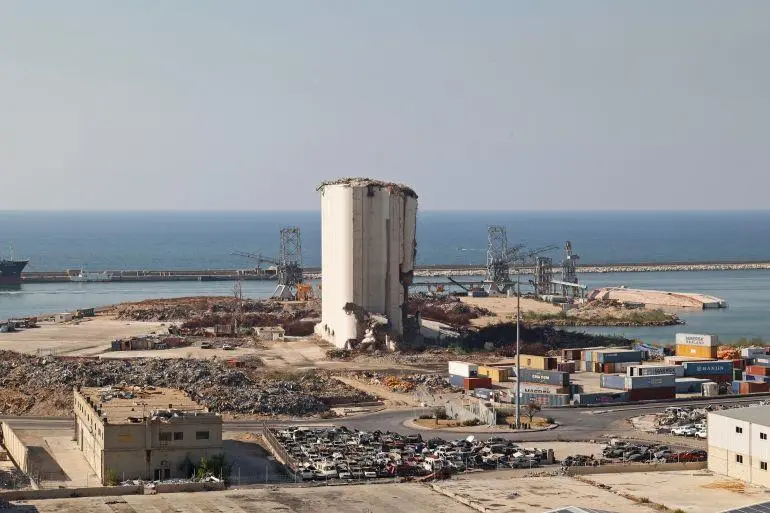
Concirrus is moving into ports and terminals in their own right, “because insurers are getting more interested in that aggregation of risk”, says Yeoman. “We have ventured into property. The assessment of [port] buildings by insurers is often done on a clumsy manual basis and we are absolutely looking at how we can improve that. There are other aspects – what sorts of goods are coming through the terminal? What’s transiting, which vessels, how often? What about port accumulations – think of Tianjin or Beirut. Insurers often have no idea what they might be insuring that may be in the port, whereas we do know. It may be trickier for ports to answer those questions, but we have access to all the data. It’s an absolute need and we are looking
Related Articles
 OPERATIONS
 OPERATIONS
 OPERATIONS