



Reducing port waiting times saves emissions
Greenhouse gas emissions can be significantly lowered by reducing waiting time at port and optimising voyage speeds, according to new research by UMAS and University College London’s Energy Institute.
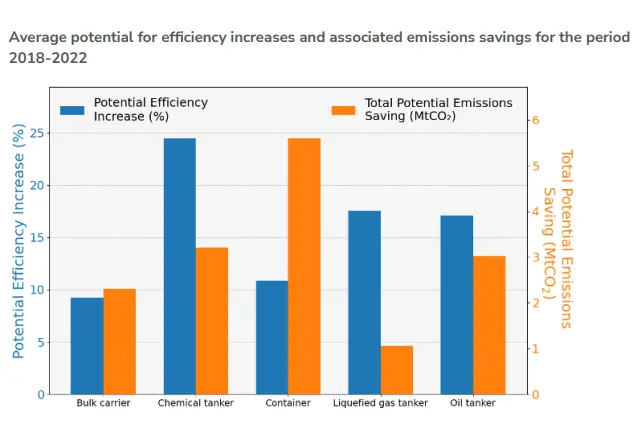
The recent ‘Port congestion, Waiting Times and Operational Efficiency’ paper found that the average ship spends between 4-6% of its operational time, or 15-22 days annually, waiting at anchor outside ports before being given a berth.
If this were reduced researchers estimate that container ships and bulkers could save approximately 10% of their emissions, while gas carriers/oil tankers and chemical tankers could save 16% and 25% respectively.
“Waiting at anchor for a berth represents an untapped opportunity for efficiency,” say researchers in the paper.
“The waiting behaviour stems from the common operational practices such as ‘first-come, first-served’ scheduling and the ‘sail-fast-then-wait’ approach and is exacerbated by systemic issues such as port congestion, inadequate data standardisation, inflexible charterparties and limited coordination between the many wider stakeholders.”
The IMO’s Carbon Intensity Indicator (CII) regulation has faced criticism from shipowners, particularly regarding emissions during waiting times before entering ports, a process over which they have limited control.
Some have proposed that the CII metric should focus solely on the seagoing voyage, excluding emissions from waiting periods. However, research suggests that waiting at anchor presents an untapped opportunity for emissions savings and operational efficiency.
By addressing these issues, ships could reduce emissions without major cost implications, say researchers.
A narrow focus on seagoing voyages alone could miss this low-cost opportunity, making it harder and more expensive to meet the IMO’s emissions reduction goals, they argue.
Related Articles
 OPERATIONS
 OPERATIONS
 OPERATIONS