



Lithium: gateway race on
Argentina is building momentum with lithium exports – big things are expected – and the race is on to capture this cargo from the so-called Lithium Triangle. There are various gateway options – Rob Ward assesses the state-of-play
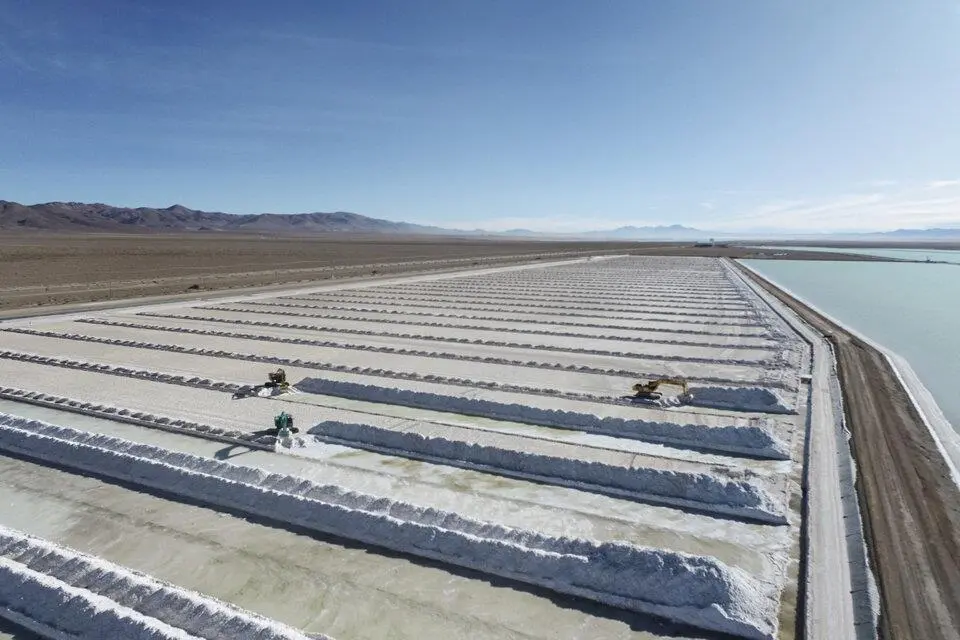
Argentina goes to the polls for a new President this month (October) and freight and transport experts in the country are confident that the extraction and export of lithium, one of the world’s most valuable metals, will continue advancing apace no matter who wins.
The struggling South American country – facing rampant inflation of more than 100 per cent per year and various other economic hardships, leading to recent lootings – currently has the world’s third-largest reserves of lithium, with 2.2m tonnes, behind Australia (5.7m tonnes) and Chile (9.2m tonnes) and ahead of China (with 1.5m tonnes), according to figures from Mckinsey&Co. Argentine mines are mostly concentrated in the northwestern regions of Salta and Jujuy, close to the borders with Chile and Bolivia. Similar reserves in those countries help form what is known as the “Lithium Triangle” and Argentina currently has 40 sites being developed and two already exporting.
Lithium-ion batteries, of course, are a key and very valuable component to lightweight, rechargeable power for laptops, mobile phones and electric vehicles (EVs). EV companies throughout the world are willing to pay a high price to obtain a regular supply of the metal, often referred to as “white gold.”
ECONOMIC BOOSTER
Patricio Campbell, Vice President of the Centro de Navegacion, which represents the interests of various shipping groups in Argentina, notes that the development and exploitation of lithium in north-west Argentina could be a huge economic booster for his country and for logistics companies.
“Argentina has many problems just now, especially the weakness of the Peso, but lithium exports are like a beacon of light in this darkness, especially for our troubled province of Jujuy,” states the veteran Campbell, who is also the president of ONE shipping line in Argentina. “Exports have already started and there is much more to come. Canadian and Chinese companies, especially, have been investing a lot in lithium and that is sure to increase, especially after the elections [Presidential] are concluded at the end of this year.”
Lithium extraction in Jujuy is particularly popular with mining companies because the state government there has been right of centre for more than 10 years [while the national government has been overseen by left-winger Alberto Fernandez for the past four years] and the rules allow for extraction to go ahead with far fewer royalties being paid than in Bolivia, where the national government runs the show, and in Chile where a mixture of private enterprise and state interests control and organise the lithium exports. In April of this year Chilean private industry giants SQM and Albermarle were told to hand over some of their equity to state control.
Today freight forwarders in Argentina are servicing these two remote regions for both imports – various machinery and sodium carbonate, used for extraction – and exports – of the unrefined lithium itself – via the ports of Rosario, Zarate and Buenos Aires as well as, to a lesser extent, La Plata. One major snag is that the Argentine deposits are a long trucking haul from the exit ports and the infrastructure in the two regions, especially impoverished Jujuy, is, to quote one shipping agent: “Absolutely terrible and in some cases non-existent”.
IQUIQUE AND ANTOFAGASTA
“However, In the future we hope to open up transport corridors to the north Chilean port of Iquique,” says Carlos Marazzi, President of Yusen Logistics Argentina, a freight forwarder heavily involved in the Lithium transport business. “That would save a huge amount in time and logistics costs, especially as the onboard ship time would be 37 to 42 days from Iquique to Shanghai instead of 42 to 47 days via Buenos Aires. Loading in Chile could save up to a week.”
Marazzi argues that the 1000km trucking haul to Iquique would be a vast improvement on the 1600 to 1700km to Buenos Aires trip, and that if another Chilean port, Antofagasta, can “get its act together” it could “in the future become Argentina’s lithium port of choice as it is only 600km away from Salta and Jujuy”. Another possible future advantage for Antofagasta is the existence of the Salta-Antofagasta railway line which passes over the Andes at 4220 metres (13,850 feet) at its highest point and could be utilised, with some investment, possibly from the Chinese plus regional governments.
CHILE OBSTACLES
One obstacle to “Argentine produced lithium” being shipped to China via Chile is that the government in Santiago has recently taken over the control of various lithium mines from the private sector and so might not want to be seen to be encouraging “cheaper logistics” for rival Argentine lithium. Another problem could be that the two passes over the High Andes – including La Polvarilla – can be closed for several months over the winter months (June to August in the southern hemisphere), although global warming has come to the aid of trans-Andean shippers in recent years with only a few days instead of several weeks lost to bad weather.
Yusen is one of three freight forwarders shifting the lithium from the two provinces to the River Plate for export, mostly to China, but also to various other destinations, including Japan, the US, UK, France, Mexico and India.
“Of the two lithium exporting companies, Minera del Altiplano sends its cargoes mainly to the United States, China, Germany and France. And Sales de Jujuy sends its exports to Japan, China, South Korea and the United States,” explains Maria Paula Torrejon, Business Development Manager for Yusen.
As for imports, the main product imported by lithium mining companies is sodium carbonate, which is used for the production of lithium carbonate. In 2022, 95,000 tonnes of sodium carbonate was imported, she added.
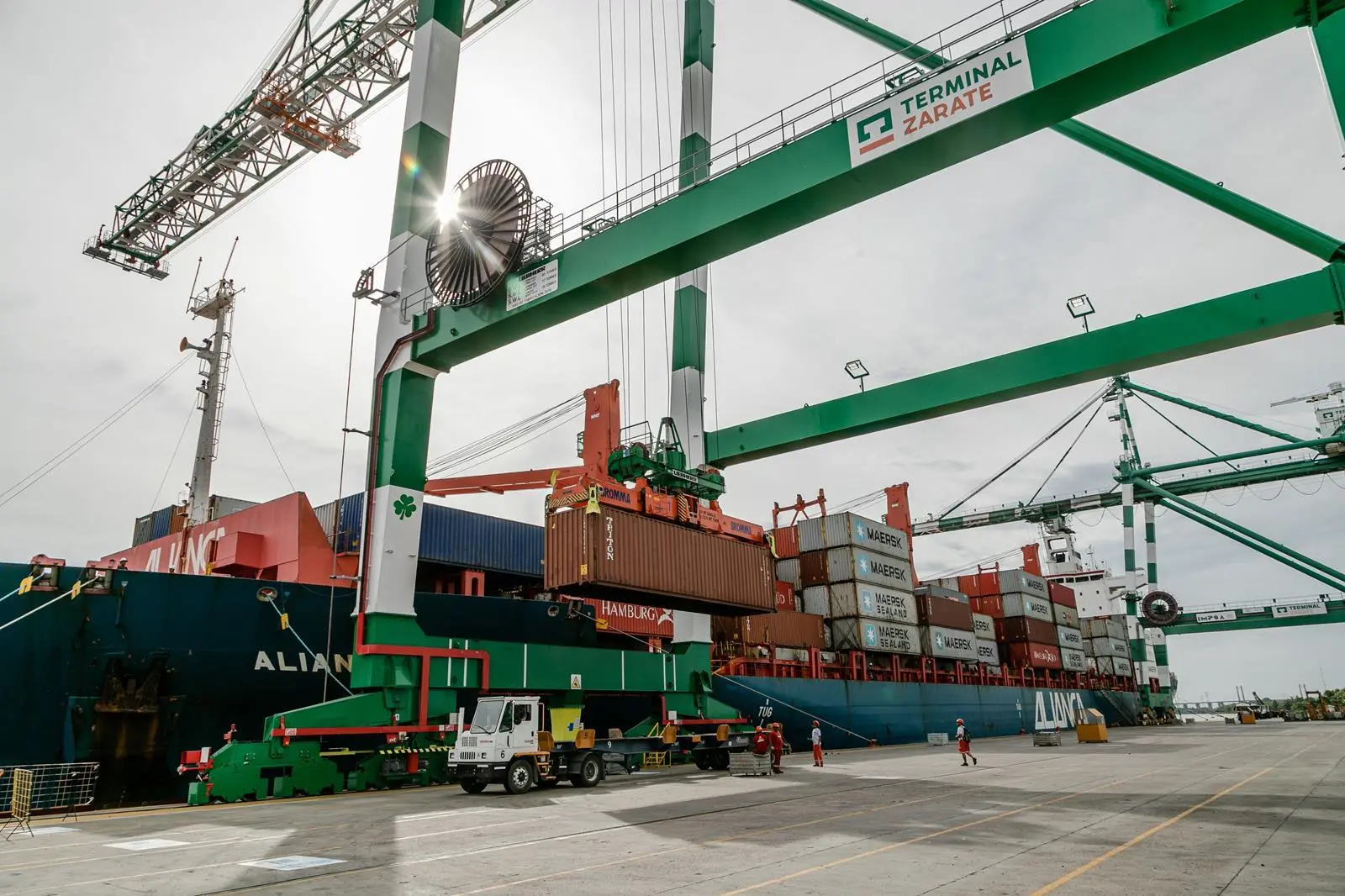
Matias Gomez, a logistics manager at Yusen, says the company mostly trucks the lithium down to Campana where it is then stuffed into containers for shipments out of Terminal Zarate (located some 90km from downtown Buenos Aires). Yusen uses its own trucks for the automotive industry and third party providers for lithium, mainly truckers from the Salta and Jujuy regions as it wants to “help the suppliers in that region develop so we try and maintain those opportunities for the local companies”.
Roberto Murchison, President and CEO of Grupo Murchison, owners of Terminal Zarate (TZ), said that his box and ro-ro terminal has a geographical advantage over Buenos Aires in the race to grab lithium cargoes.
“I think Argentina, in spite of the macro-economic situation, is in a good position to exploit the lithium reserves and Terminal Zarate is in a very good position to help facilitate that,” says Murchison. “Due to our location to the north of BA and our railway connections we are a good partner for lithium exporters.”
Trucking cost pricing is very complicated because of Argentina’s current hyper-inflation and growing “Black/Blue market” on currency exchanges (Argentines call it the “blue dollar” which is the unofficial exchange rate). At the time of writing, Yusen managers were quoting a freight price of ARGPesos920,000 for a round trip (taking 36 hours each way) which would be US$2,628 at the official exchange rate of 350 to the greenback but half that at the blue dollar rate of 725: both rates of course are likely to change almost weekly.
In terms of trucking costs, the port of Rosario – where Maersk operates a feeder service – would have some advantages over BA and Zarate as it is 1200km from Salta and Jujuy (about 310 km closer than BA and 120 km closer than Zarate) but it is, essentially, a grain port and at times is beset by labour disputes.
THE CHINA FACTOR
China is of course at the vanguard of EV production and so its demand for lithium-ions to power up its batteries is almost unlimited. China is also very thoroughly engaged with several South American countries, and especially Peru and Argentina, via its international 10-year-old Belt and Road Initiative (BRI), and always seems to be on hand to provide cash when needed for infrastructure investments that serve its own interests.
From January to June of this year, China imported just under 8000 metric tons of lithium (both lithium carbonate and lithium chloride), from Argentina paying US$127.6m FOB for the privilege. In second place is the United States, with 2750 tonnes, followed by Japan, 2141.
For the whole of 2022 40,000 tonnes of lithium were exported, corresponding to 30,000 tonnes of lithium carbonate and 10,000 tonnest of its derivative, lithium chloride, which seems particularly popular with German importers.
Cosco, the Chinese shipping company, is currently investing US$3 billion on the deepwater port of Chancay, north of Lima, the capital and main city of Peru, and this could act as a main hub for lithium and other mineral exports to China, including transhipments up and along the West Coast of South America (WCSA) from Iquique and/or Antofagasta. Cosco told attendees at a port and shipping conference in Lima recently that Chancay would open for business in the third quarter of 2024 and when it does it could be a game changer for Argentina if logistics pathways over the High Andes can be negotiated, although, clearly, the port terminals in BA and Zarate would lose some business with that scenario.
Related Articles
 OPERATIONS
 OPERATIONS
 OPERATIONS