

On the other side of the pond
Dr Robert G Kanter of the Port of Long Beach, California is one of the chief architects of the port’s groundbreaking environmental initiatives – among the most aggressive implemented by any seaport in the world.
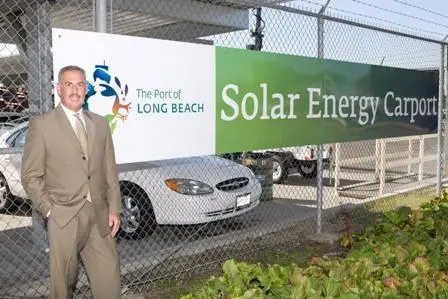
Dr Kanter is managing director of Environmental Affairs & Planning at the Port of Long Beach, the second busiest container port in the US, moving goods valued at more than $140 billion each year and supporting more than 316,000 jobs throughout Southern California and almost 1.4 million jobs across the US.
What’s going on at the Port of Long Beach?
At the Port of Long Beach, doing business and protecting the environment are one and the same. Our Middle Harbour Redevelopment Project – two terminals we are combining into a single, state-of-the art terminal – is a perfect example. Every aspect of the project – the design, construction, the infrastructure and operations – is a marriage of innovation and sustainability.
Green measures include shore power for ships at berth to plug in; expanded on-dock rail to reduce truck trips; and green cargo handling equipment such as clean switcher locomotives, automated cranes and electric rail-mounted gantry cranes. Also, only clean trucks – those with 2007 or newer engines – can serve this and all our other container terminals.
This commitment to running a green port is also reflected in the lease we just signed with Orient Overseas Container Line (OOCL), a longstanding partner in our green initiatives. Incorporated into this 40-year agreement – valued at $4.6 billion – are numerous sustainable practices including cold ironing, slowing vessels as they enter and leave the Port, and maintaining the facilities built to LEED (Leadership in Energy Environmental Design) standards, which covers everything from materials used in construction to high-efficiency lighting. Using the most modern technologies and strategies, the new terminal will double existing capacity while cutting related emissions in half. There’s a bottom line benefit to our customers, too. Lowering their costs by using resources more efficiently makes their business more sustainable.
Is Middle Harbour the only example?
No, it’s the most recent. We are especially excited about our Pier S project because it is the last vacant parcel in the harbour district. This project represents the opportunity to build a modern, green terminal from the ground up. As with Middle Harbour, we’ll deploy the cleanest technologies and strategies available.
What sustainable practices are used in port construction? Green practices are built into our bid specifications. Dredging is a great example because we require electric dredging equipment, and we’ve installed sites around the harbour to power those machines. Also incorporated into our projects is the reuse of dredged material.
This emphasis on the environmentally responsible and sustainable operations, is it new?
Clean air, water and soil have always mattered to the port, and major cleanup projects were underway when I was hired in 1990. The adoption of the Green Port Policy in 2005 marked the full shift from compliance-oriented programmes to proactive environmental initiatives, leading to the adoption of the landmark Clean Air Action Plan in 2006 and the Water Resources Action Plan in 2009. Those plans incorporated existing strategies – such as cold-ironing and clean cargo handling equipment programmes – and built on them with bold measures such as Clean Trucks Programme, which replaced an entire fleet of privately owned drayage trucks with new, cleaner-burning models. These programmes have positioned us as a leader and the go-to group when new government rules are being crafted. This is key because new rules must make practical business sense, too.
California is known worldwide for its avant-garde environmentalism. How does that affect a major U.S. port?
It’s a foregone conclusion that if you’re going to do business in California – especially if you’re a public agency — you’ve got to be an environmental leader. We reflect that in our operations, and we’re proud to be a model. Sure, there can be pressure from the public, the press, elected officials and the regulatory agencies. But it doesn’t hurt to have some pressure, and it’s the right thing to do anyway. Caring about business and protecting the environment aren’t mutually exclusive, and we’re demonstrating that today.
What role does measuring environmental performance play in running a green port?
Reliable numbers are the backbone of our programmes. This starts with agreements on the methodologies for measuring pollution from all sources — ships, trains, trucks, cargo-handling equipment, tugs and other watercraft. Industry and government must agree on the math behind the measurement so the numbers are meaningful and credible to all. By standardising our calculations, our goals are clear and our progress is real. When we say that in five years, our efforts have resulted in a 72 percent decline in diesel particulate matter, a 73 percent cut in sulphur oxides, a 46 % decrease in smog-forming nitrogen oxides and an 18 % reduction in greenhouse gases, it’s real. I’m very proud of our metrics and our open, transparent reporting. You’ve got to be accountable.
Didn’t the Port’s first cold ironing project involve an oil import terminal?
It did – we partnered with Arco/BP – and the project remains the first and only time anyone has attempted to cold iron oil tankers. The learning curve was steep and costly, but the experience has been invaluable. In solving these problems, we paved the way for developing industry-wide standards that helped inform statewide rules due to take effect in 2014. The BP project proves we are willing to put our money were our mouth is, and this remains the case.
Alternative fuel and hybrid programmes appear to be at the heart of many of the Port’s environmental initiatives. Is that true?
Absolutely, and this is an area that led up to our comprehensive initiatives. In 2003, we completed our port-wide conversion to more fuel-efficient cargo handling equipment retrofitted to run on clean diesel and outfitted with diesel oxidation catalysts for additional emissions reduction. We worked with our terminal operators to convert more than 600 pieces of equipment. Under our Clean Trucks Programme, we teamed with air quality agencies to help subsidise trucks that run on LNG. We also helped fund infrastructure to ensure the trucks have a place to refuel. Through our Technology Advancement Programme, along with our partners, we’ve dedicated more than $15 million over five years to support cutting-edge environmental science and technology with the private sector, including the first diesel-electric hybrid tug, a hydrogen fuel cell drayage truck, ballast water treatment systems, and ship engine retrofits using fuel emulsification systems and slide-valve technology.
How does the Port deal with climate change?
Specific examples include our solar energy projects – folded into new facilities and renovations – and our Greenhouse Gas Reduction grant programme with $5 million in funds for renewable power, energy efficiency, clean transportation, tree planting and other landscaping projects. Like all our environmental initiatives, these projects demonstrate our commitment to doing our part and more. But reducing greenhouse gases is a global challenge larger than any single entity. Here is where collaboration is critical, and we are proud of our teamwork with industry, regulatory agencies and our fiercest business competitor, the Port of Los Angeles, to make that happen.
How did you become involved in the environmental side of port business?
As a kid, my hero was Jacques Cousteau. That fuelled a love of oceanography, which led a doctorate in biology with an emphasis in marine ecology. My first job out of undergraduate school was on a marine research vessel investigating the effects of the 1969 Santa Barbara Oil Spill. Eventually, I went into consulting work solving marine environmental problems, and the Port of Long Beach was one of my clients.
Are environmental issues personal for you?
Absolutely. I spend a lot of time in the water. I surf, I swim, I scuba dive. All those things are in my blood. I appreciate being in clean, pristine waters and not seeing bottle tops and plastic bags floating by. I want an environment like that everywhere.
You also teach classes at California State University Long Beach’s Centre for International Trade and Transportation. Why?
Academics have always been a part of my life. I’d like to make sure that the environmental ideals I espouse are perpetuated and a classroom is a good place to impart that knowledge. Young people with zeal who care about the environment will continue to make the world a better place.
Dr Robert G Kanter has more than 30 years of experience in public service, the private sector and academia. He has represented the Port of Long Beach and California on numerous national, state and regional regulatory advisory committees dealing with port development, operations and environmental affairs.
Related Articles
 ALTERNATIVE FUELS GREENPORT