

Look beyond the second-hand stigma
Experience shows that used equipment can provide an efficient and timely alternative to new units, and the service base is more sophisticated than you might think
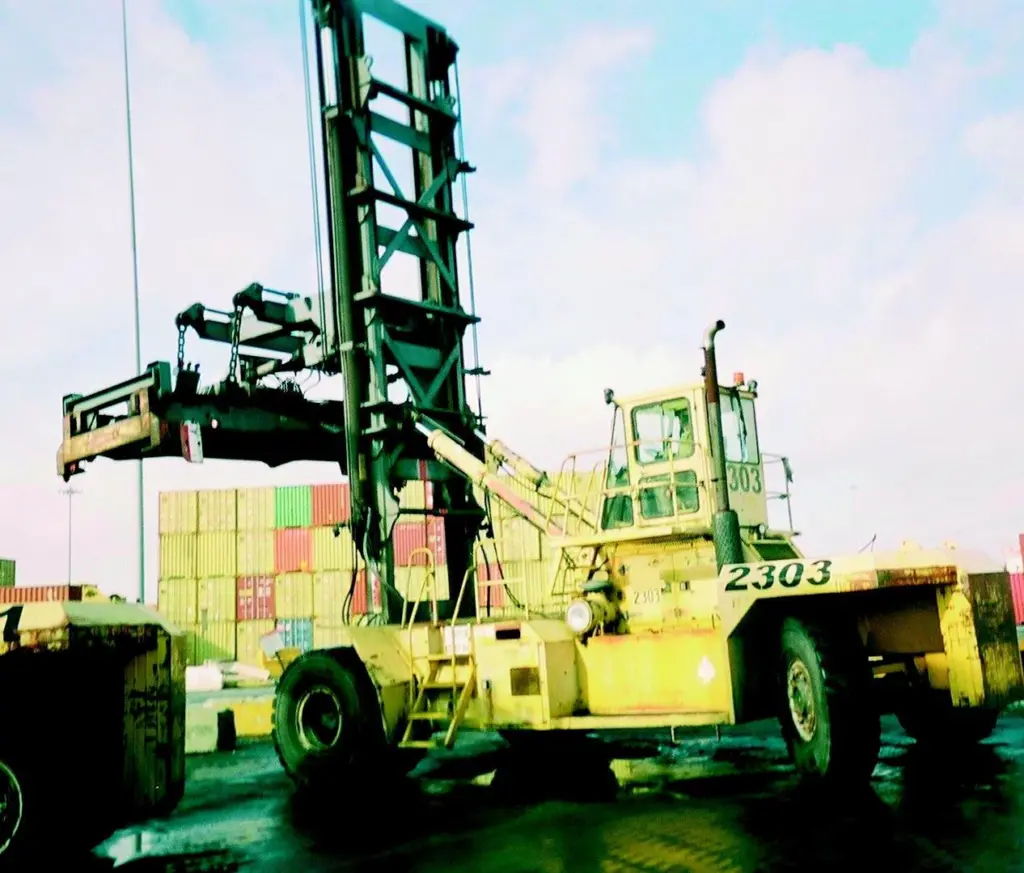
Understandably not all port operators want to let it be known that they are consumers of second-hand container handling equipment and similarly not all equipment suppliers, and particularly those involved in new equipment sales, want to highlight their involvement in this sector. This almost clandestine element stems from the impression that second-hand equipment sits somewhere down the ranking when it comes to fulfilling an equipment need, or to put it more bluntly, doesn’t offer the same class of transaction as the acquisition of brand new equipment.
The international second-hand container handling equipment market is nevertheless a sizable one and one that is increasingly meeting a market need, especially as the container finds its way into more and more remote locations. Container operations can start sooner and with a higher level of efficiency when the right handling power is introduced at the right price.
“This is the fundamental point, ” says Jim Duffy, president of USbased Top Line Equipment, a company active in second-hand crane sales on a global basis. “Second-hand equipment, good equipment, can play a fundamental role in bringing back the red line in a start-up operation say in the developing world, where there is potential to grow the business volume. The cost of this equipment – say $2m all in for a container gantry as opposed to $6m for a new one – can be just what is required for a new business start-up.
“Through a significantly reduced cost base, it can allow the business to establish a firm footing with really only a marginal difference in performance compared to acquiring new equipment, especially in an emerging market situation where the operational conditions are not normally too sensitive to the pedigree of the equipment so long as the equipment is reliable.”
That this is fact, as opposed to theory, is supported by the reality:
international terminal operators will often transfer quayside gantries from one terminal location to another, typically, from one developed port location to a new business opportunity in the developing world.
This takes place outside of the context of second-hand equipment sales – it is in effect an internal transfer of equipment assets – but is nevertheless a pointer to the fact that this type of equipment redeployment is considered a good solution in specific circumstances.
There is also the reality with quayside container crane sales that the new equipment acquisition business is booming. “This presents second-hand equipment sales with an opportunity if an imminent requirement comes up, ” elaborates Mr Duffy. “Second-hand equipment supply, particularly with the larger items of equipment such as cranes, can step into the breach when the long delivery times now being offered by manufacturers come into play. There is a direct correlation between the health of the second-hand equipment sector and that of the new crane supply market which basically adds up to when they do well, we do well.”
And again this seems to be borne out by internal experience with terminal operators – for example, when there were scheduling problems with deepening the draught at the La Spezia Container Terminal (LSCT), Italy cranes originally purchased for use at this terminal were snapped up for use in South Africa. Similarly, Valenciabased Maritima Valenciana at one time acquired cranage originally intended for use at APM Terminal’s Suez Canal Container Terminal (SCCT). Both acquiring parties had an imminent requirement and when cranes originally destined for use at LSCT and SCCT became available there was no shortage of instant demand for them. For the record, both LSCT and SCCT now have their full complement of new cranes and have moved beyond the short-term problems that led them to dispose of what was effectively brand new cranage on a resale basis.
Experience also shows that the more traditional type of secondhand container cranage can play a supplementary role for new cranage in some instances.
Crane knock-downs are one example, of the type suffered recently in Mobile, Alabama, which resulted in the complete effective demolition of an early generation container gantry. Replacement of ageing failed cranage is another. The current situation in the US enclave of Guam being typical of this. Here the port has traditionally had three container gantries in service, all of which were originally acquired from Japan on a second-hand basis, and one of these units has recently been designated as unsafe to work due basically to old age. The port is now going through a public procurement process to acquire a replacement gantry on a second-hand basis, the vessel types and overall operational conditions Guam experiences being compatible with meeting this demand with second-hand equipment. Unfortunately, in Guam’s case the public procurement process is, by its very nature, a somewhat lengthy one and as such the port cannot receive the full benefit of being able to capitalise on the “quick fix” characteristics of second-hand equipment supply. Typically, where this works best is in the private sector in situations such as an operating upgrade from mobile cranes to standard quayside gantries or meeting new demand quickly as a result of a new line or consortia calling.
Price and the short lead times thus emerge as the two dominant selling points associated with second-hand equipment supply, characteristics which tend to extend across all categories of equipment from heavy plant, such as quayside gantries, to mobile plant operating on the landside, like reach stackers and FLTs.
Just as Top Lift Equipment specialises in the top end of the market there are various organisations that specialise in the resale of mobile plant like Forklifts Wholesale International based in North America which presently has diverse Taylor machines on its books. Equally, a number of the suppliers of new mobile plant have second-hand equipment for sale with this usually able to be viewed initially via the companies’ websites. Kalmar, for instance, offers this facility.
THE QUALITY PICTURE “There is, however, used equipment and used equipment, ” emphasises Mr Duffy and various other suppliers echo this sentiment from a quality point of view.
They all emphasise that quality has a lot to do with a piece of equipment’s maintenance record, which should be readily available to access review. Checking this can provide a great insight into what you are actually getting.
Equipment surveys are also strongly recommended – diligence at the front end of the sale greatly reducing the potential for problems down the track.
All the second-hand equipment suppliers canvassed agree that there can be a significant variance in quality between different units depending on where equipment is sourced from. With large items of equipment such as cranage invariably this will not be held in stock by the individual suppliers, they will simply be made aware that it is available for sale and will source it in-line with an expressed requirement. They are thus very much in the hands of the operator as to the quality of the unit eventually provided, although from experience they usually have some insight into what is good and bad.
Cranes sourced from Germany are more or less universally acclaimed as being the top-end-of-the-range when it comes to second-hand units; attention to timely maintenance here being a major factor in this. “You can just tell when you look over a crane as to whether or not it has received tender loving care, ” emphasises one leading supplier. “If you go in the machinery house and everything is properly lubricated, painted and the environment is generally a good one then you know you have something serious to consider. The investment in a survey has to be worth it every time.”
A comprehensive style approach is visible in the past activities of BMT Asia Pacific which was commissioned by a private Indonesian company to provide technical and commercial support during the procurement, alteration, relocation and commissioning of two secondhand quayside container gantries. BMT Asia Pacific basically went out and identified the appropriate cranes, structured the procurement contract, undertook the pre-purchase inspection and approval of repairs and modifications, managed the relocation and recommissioning, and assisted with setting up training and maintenance systems.
There are, therefore, clearly different levels of service available within second-hand equipment supply and when this is fully appreciated by the purchaser, various economies and efficiencies become available other than those stemming from the core transaction itself.
Related Articles
 CONTAINER & CARGO HANDLING
 TERMINAL OPERATIONS
 CONTAINER & CARGO HANDLING