![PortStrategy[GreenPort]](https://www.portstrategy.com/wp-content/uploads/2026/09/PortStrategyGreenPort.svg)




Dampier port completes major fender installation
Dampier’s new bulk handling facility strengthens export capacity with specialist fender systems, bollards and mooring equipment installed
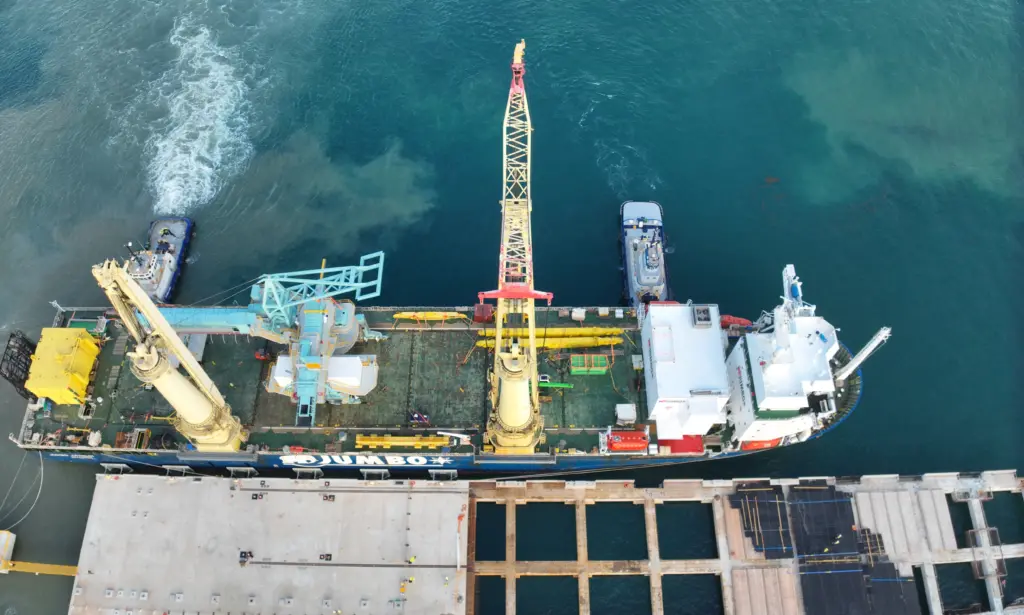
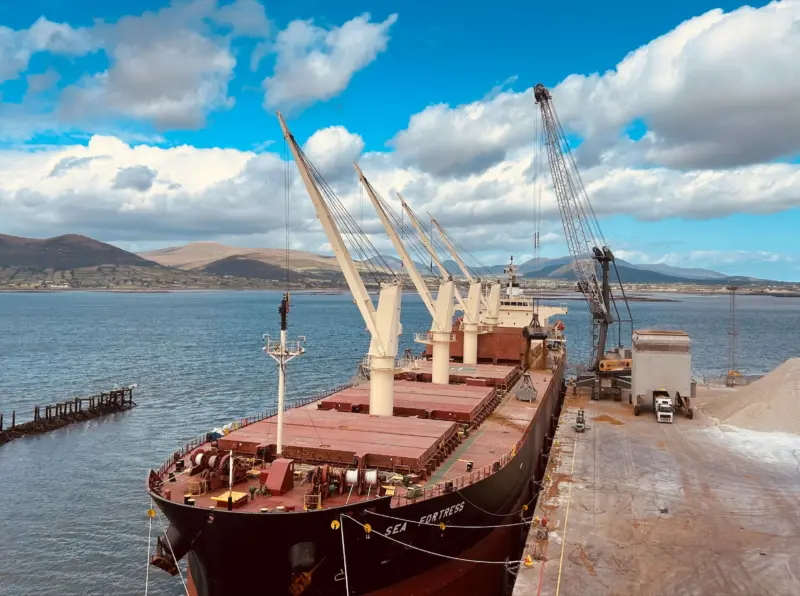
The Port of Dampier in Western Australia has expanded its maritime infrastructure with the completion of specialist berthing and mooring equipment at the new Dampier Bulk Handling Facility.
The development forms Stage 1 of Pilbara Ports’ wider Dampier Cargo Wharf Projects and is designed to support bulk urea exports, general cargo operations and cruise vessel calls.
ShibataFenderTeam supplied and installed 18 Dual Cone Fender Systems for the facility under a contract with Clough Projects Australia, which was responsible for design and construction on behalf of Pilbara Ports. Jacobs served as project consultant.
The equipment package includes 36 SPC 1600 Cone Fenders, integrated into dual systems featuring closed-box steel panels measuring 4,700 by 8,500 mm and fitted with 100 mm thick ultra-high-molecular-weight polyethylene facing pads. The supply also comprised 21 T-head bollards with rated mooring capacities of 100 and 150 tonnes, alongside a 7.5 kW capstan manufactured by Straatman.
The new wharf incorporates a 200 m land-backed structure, a 280 m berth pocket with a depth of 13.2 m and an 11 m deep vessel manoeuvring area. These dimensions are intended to accommodate Supramax and Panamax bulk carriers, supporting the port’s expanding cargo-handling requirements.
The scale of the fender systems presented particular engineering and logistical challenges throughout structural design, manufacturing, delivery and installation. Close coordination with Clough’s site team helped ensure the equipment was installed according to the project schedule despite the substantial dimensions of the components.
All 18 fender systems, together with the bollards and capstan, have now been installed at the new berth. The wider wharf development also incorporates more than 8,000 tonnes of precast pile caps, beams, planks and fender blocks, highlighting the scale of the infrastructure investment.
The completed installation strengthens Dampier’s capacity to handle diverse vessel types and cargo requirements, while adding another Australian project reference to SFT’s portfolio of port infrastructure solutions.

Related Articles
 CONTAINER & CARGO HANDLING
 CONTAINER & CARGO HANDLING
 EQUIPMENT