



Keeping dangerous cargoes safe (REVISED)
Taking care of shore-side workers handling dangerous cargoes can be tough with mis-declaration and a lack of understanding rife, as Patrik Wheater explains

Although employers are now generally more altruistic than before, stevedores, tank storage workers and cargo handlers throughout the supply chain continue to be exposed to a range of health and safety risks from handling dangerous cargoes.
There are bulk cargoes that are classified as dangerous from the outset, such as sulphuric acid, for instance, and there are those seemingly innocuous cargoes that become dangerous due to their inherent properties, say calcium hypochlorite, or some coal cargoes which can self combust under certain conditions. Then there are those incidents where ordinary non-dangerous cargoes have become infested. Remember the legal debacle surrounding the Giannis NK and a hold full of Khapra beetles?
If you’re not careful, coming in to contact with dangerous cargoes can obviously lead to burns, poisoning, being overcome by fumes and longer term ill-health. But links have also been identified between exposure to chemicals at work and diseases of the respiratory system, the nervous system, various skin conditions and certain forms of cancer.
And although research to identify the extent or severity of any such conditions among ship and port workers has been limited, the Finnish Institute of Occupational Health found that the odds of tanker deck crews contracting lymphoma increased if employment had lasted over three years. The Finnish study also found that leukaemia and renal cancers had similar trends to that of lymphoma.
Researchers at the Antwerp Maritime Academy also assessed the effects of toxic fumes on crews aboard chemical carriers and initial research suggests that there is a possibility that vapours – principally Benzene, Ethylbenzene, and Xylene – could be seeping through to the accommodation blocks via air intakes and ventilation systems.
While both of these studies focused on seafarers, it can be assumed that those working further up the supply chain would also have an increased risk of ill health if they work for prolonged periods in close proximity to some of these dangerous goods.
Even seemingly benign vegetable oils could be detrimental to a worker’s health and although there is little known about their effects, lipoid pneumonia has been reported in a worker who observed the testing of fire extinguishers against fires involving lards and, in a separate case, eight former workers at a microwave popcorn production facility were diagnosed with a severe lung disease, bronchiolitis obliterans, after being exposed to volatile organic compounds from heated soybean oil. A similar lung disease has also been detected in beagle dogs that have been exposed to oleic acid, a major component of some vegetable oils.
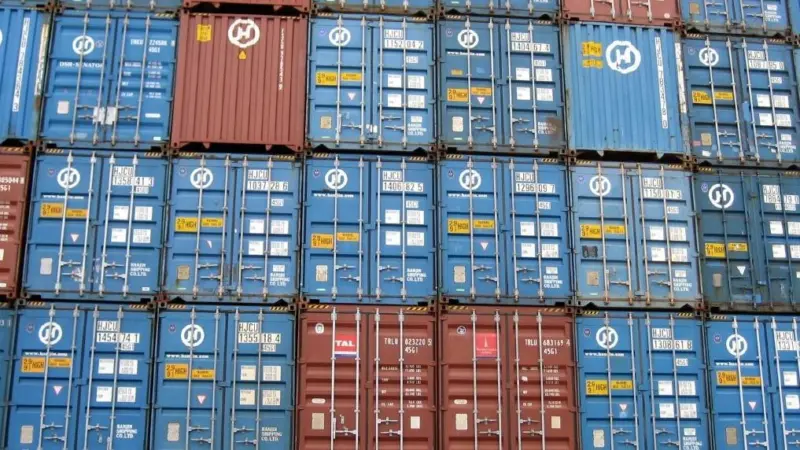
Port workers and seafarers also face potential health and safety hazards when handling containerised cargoes. On the face of it moving or stowing a container seems a non-hazardous operation, but if the box is full of mis- or undeclared cargoes, maybe fireworks or even something more perilous, then container handling operations could be catastrophic. Even opening the box could be lethal if its contents have been incorrectly documented and the container hasn’t been vented or fumigated.
In a report published in 2006 by Drewry Shipping Consultants, “up to 10% of the world’s containerised cargoes comprise declared dangerous goods, and the proportion is rising. Research identified the total volume of global containerised trade in 2006 as 127.8m teu (an increase of about 10% over 2005), indicating shipments of between 6.4m teu and almost 13m teu of declared dangerous goods a year”.
There is, as TT Cub’s risk management director Peregrine Storrs-Fox has remarked, an increasing trend to transport dangerous cargoes in containers but IMO sampling over the last decade has uncovered a deficiency rate averaging about 30% on the details of declared IMDG cargoes.
“Of the 166 IMO member states an average of five per year have reported on systematic inspections over the last decade, amounting to less than a 0.5% inspection rate of only declared cargoes. We can’t count the undeclared or estimate the extent of the mis-declared or badly stowed containers,” says Mr Storrs-Fox, due to the lack of uniform standards for shore-side personnel, in particular those consigning and packing dangerous goods.
“It is shippers and consignors who need to be targeted to ensure that dangerous goods are properly marked, packed, secured and declared (amongst other things). Once goods are released in the supply chain, there is inevitably a more limited ability to intercept a wrongly declared or stowed cargo or prevent an accident, although everyone in the chain has a responsibility to be diligent in their particular scope of activity,” says Mr Storrs-Fox.
Indeed, according to Norwegian classification society DNV, which in 2006 portentously developed a new Standard of Competence of Shore-based Dangerous Goods Personnel built precisely on IMDG (International Maritime Dangerous Goods) Code specifications, the requirements stipulated for setting up and running container packing stations are few and little investment is made in training.
“Consequently, chemicals may be packed together in containers without taking into consideration how they will react in the event of a leak, the contents of containers may be inadequately declared and loads may be insufficiently braced against shocks in transit. All these factors pose safety threats and onboard crew have very limited opportunities to detect and address these.
“The IMDG Code issues complex rules for the classification, packaging, labelling, container stowage/segregation and documentation of hazardous substances, and most shippers exert themselves to get things right. These, however, are time-consuming tasks in a fast-moving process and procedural requirements cannot replace the competence of those involved in these stages of the shipping process” said DNV when it launched its new competence standard.
For the past two years, the TT Club has lobbied successfully for a revision to the IMDG Code to include shore-side personnel, and in January 2010 training for all those handling dangerous goods on land before shipment by sea will become mandatory.
As such, all shore-based personnel engaged in the transport of dangerous goods, including those that classify, identify, pack/unpack, mark, label or placard, document, accept, handle, prepare, load/unload, carry in transport, and survey or inspect dangerous goods for transport, have to be certified to do so.
The training requirements are extensive and individuals will have to show a thorough understanding of: the different classes of dangerous goods, labelling, marking, packing, stowage, segregation requirements and compatibility provisions; a description of the purpose and content of dangerous goods; transportation and emergency response documents.
This will precede function specific training and safety training, which includes methods and procedures for accident avoidance, such as proper use of package-handling equipment and appropriate stowage methods; emergency response plans and the dangers presented by the various classes of dangerous goods and how to prevent exposure to those hazards.
There are of course hundreds of training courses for handling dangerous cargoes and conscientious port operators have been ensuring that their employees are trained to deal with hazardous cargoes for some time now.
Evert Wijdeveld, a safety and environment adviser with Deltalinq, an organisation that represents the common interests of all the logistical and industrial companies in the Rotterdam port and industrial area, is very much in favour of the IMDG amendment. And told Port Strategy that although the Port of Rotterdam has always trained its staff in IMDG Code requirements, those working within inland terminals will be made more aware of the prescriptions laid down in the Code.
“The new requirement will make a considerable difference because it’s global. Everyone in the world involved in loading a cargo into a container or the loading of a ship will have to be aware of the requirements.”
The PSA Institute, the training and research division of the Singapore container terminal, has also provided training and its three-day course has been endorsed by the Maritime & Port Authority of Singapore.
The Hamburg Port Training Institute’s dangerous goods course is similarly extensive and has been developed to provide trainees with a thorough introduction and grounding in IMDG Code requirements. Different classes of hazardous cargoes are explained and demonstrated as well as the correct procedures for labelling, packing, segregating, handling and documenting these goods. The course does go further with modules covering emergency response, security control, dangerous bulks (fish, meal, cotton, wool); and contingency and containment plans.
Related Articles
 NEWS
NEWS
 CONTAINER & CARGO HANDLING
 OPERATIONS