




Port hydrogen plans
The American Association of Port Authorities says that its members are banking on hydrogen as one of its future fuels of choice
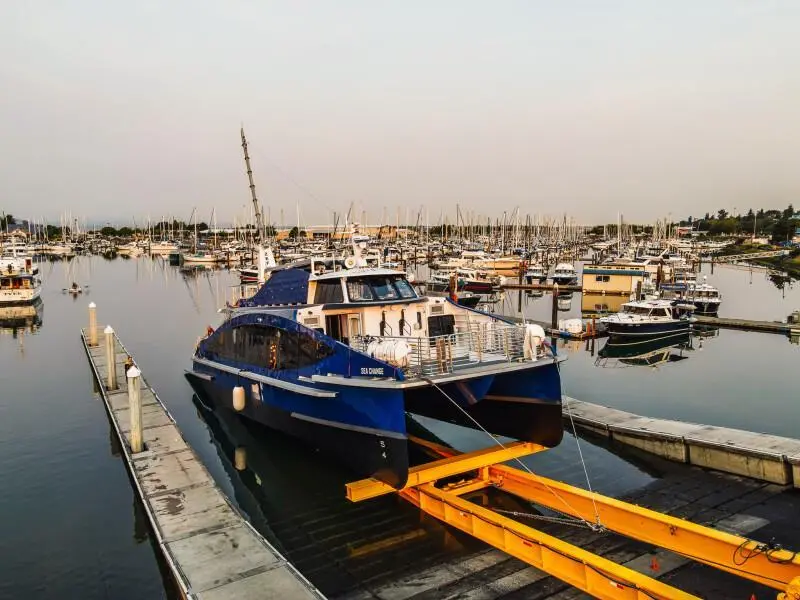
AAPA says that for maritime shipping, electric battery power will be insufficient in eliminating the use of fossil fuels, but hydrogen can serve as an alternative because it can power combustion engines and is feasible use in large, ocean-going vessels.
”When used in a fuel cell or a mono-fuel internal combustion engine, it is a zero-carbon fuel. Alternatively, when it is used in a dual fuel combustion engine, carbon emissions are significantly reduced compared to pure fossil fuels,” AAPA said in its first in the series of spotlights on alternative fuels.
Energy transition
But the association warns, or hydrogen to truly be a zero-carbon fuel, the production, storage, and transportation methods must also be carbon free.
It said there is lots of work to be done to get prepared. Due to temperature and volume requirements, it will require large, unique infrastructure investments to scale for industrial purposes.
Also, for hydrogen to truly be a zero-carbon fuel, the production, storage and transportation methods must also be carbon free.
The association said setting up infrastructure for brown and grey hydrogen (hydrogen processed using fossil fuels) can be an effective way to transition to green hydrogen fuel (processed using renewable energy sources, like solar or wind) when it becomes more cost effective.
To promote the application of hydrogen in the maritime industry, it’s backing the US Hydrogen for Ports Act of 2021 (S.3111) which seeks to establish a grant program to support hydrogen-fuels equipment at ports and the use of hydrogen-derived fuels in shipping.
The AAPA said that the bill would establish a grant programme that allocates US$100,000,000 for each fiscal year from 2022-2026 to provide competitive grants for the purchase, installation, construction, facilitation, maintenance and/or operation of hydrogen or ammonia-fueled technology. Eligible projects would include cargo-handling equipment, maritime vessels, shore power, onsite power generation and fuel storage and fueling.
The Infrastructure Investment and Jobs Act (IIJA, also known as the Bipartisan Infrastructure Law, or BIL) has created a new Department of Energy (DOE) programme to establish regional clean hydrogen hubs across the country with the end goal of creating a national network of green hydrogen.
Related Articles
 ALTERNATIVE FUELS GREENPORT
 ENERGY & TECHNOLOGY GREENPORT
 ENERGY & TECHNOLOGY GREENPORT