


Give as you get
Looking toward energy generation, the port of Los Angeles’ latest initiative is the first completed phase of a 71,500sq ft roof-top solar system capable of generating 3.5 million kilowatt hours annually.
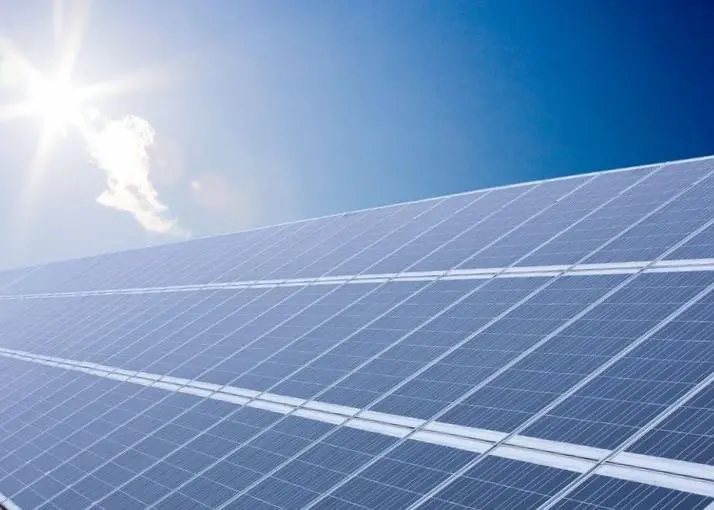
The power will be run back into the Los Angeles Department of Water and Power energy grid through a meter which keeps track of the gain.
Although it doesn’t expect to meet all the ports needs, this first solar photovoltaic installation, which is expected to result in an annual $200,000 energy cost savings, is the first phase of a solar power program that will eventually provide the port with 10 megawatts of solar system generation capacity. The $9m project, announced by the port last September, will include a total of 1.16m ft2 of rooftop solar panels when complete.
However, power generation at ports still seems to be down to a handful of market leaders who are piloting efforts, while follow up is still, on the whole, slow.
Simon Powell of the UK’s Marine South East says: “My experience is that very few port sites have so far adopted alternative energy solutions such as wind power. Although interest levels are growing and the availability of suitable technologies is increasing, it is not a mature market.”
What has recently changed the game in many countries, particularly the UK, is the advent of generous feed-in tariff (FIT) schemes for renewable devices of less than 100kW output. Mr Powell says these tariffs “make generating electricity using renewable technologies economically attractive in many cases that were not previously viable. Effectively, the tariff is compensating people for the risks involved in adopting relatively immature technologies where returns may not be guaranteed.”
As exposed coastal locations will generally have higher mean wind speeds than inland locations, ports and harbours could make a useful contribution. This is significant because a small increase in wind speed makes a big difference in power generation. “Generated power increases with the cube of wind velocity,” explains Mr Powell. The challenge for both customers and installers is to accurately evaluate the available wind resource, bearing in mind that turbulence created by local obstructions can have a dramatic effect on the efficiency of some turbines.
Predicting outputs from solar photo-voltaic (PV) systems is, conversely, more straightforward, even in northern climates. “It makes sense to consider installing PV panels on suitable roofs, as ports usually have these in abundance,” says Mr Powell.
Showing willing to take up the environmental challenge and wind-generate supply, APM Terminals Rotterdam recently started to run on energy generated by turbines in the east of the Netherlands and on the nearby Landtong in the port of Rotterdam. It will power 14 quayside cranes, the connections for reefer containers and lighting for the terminal site and its buildings – and for it’s €12.5m ($15.7m) investment in the distribution network, APMT will gain both cheaper energy and reduce CO2 emissions by 45% a year. And, crucially, it will buy APMT some of those increasingly important “green credentials”.
Related Articles
 DIGITAL
 OPERATIONS
 PORT & TERMINAL NEWS