



FUELLED BY A HEALTH CONSCIOUS WORLD
41.6m tonnes of bulk vegetable oils and fats was traded by sea in 2003 according to Oil World data reported by Intertanko. Nick Elliott looks at the principal commodities and trade flows and at the investments being made in terminal and storage facilities.
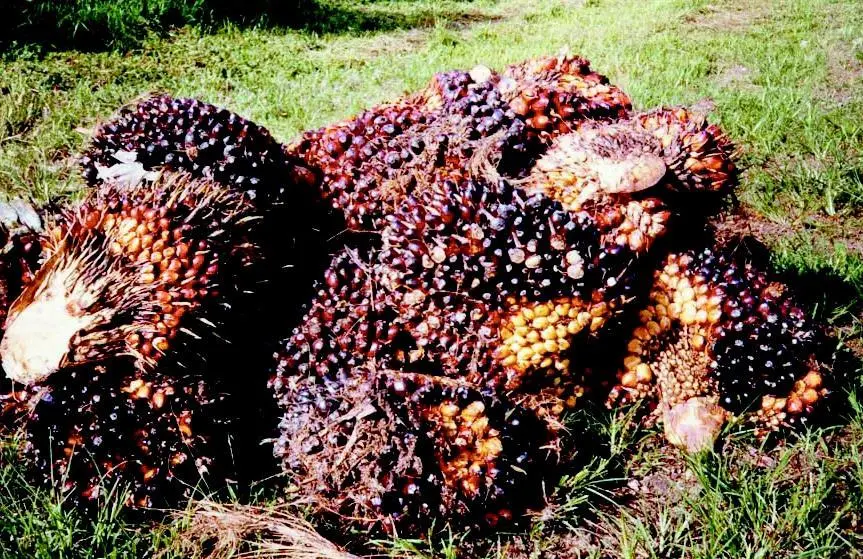
Of this total, 20.6m tonnes was accounted for by palm (lauric or tropical) oil and 9.3m tonnes by soybean (soft) oil. In broad terms, the palm oil is produced by and shipped from Malaysia and Indonesia, which together account for 90% of all palm oil exports, whilst soybean oil originates from the Americas and Europe. Argentina (a GM producer) exports over 4m tonnes annually followed by the EU and Brazil at around 2m tonnes each and the US at 0.8m tonnes. The EU is also a major importer whilst China is the single strongest growth market. Southeast Asia, Turkey and the Central Asian republics are other fast growing markets for soybean oil.
Large-scale soybean crushing plants operate in both the exporting and importing countries. As a soft oil, soybean oil can be shipped in unheated tanks and therefore commands lower rates thus attracting older and less sophisticated tonnage to the trade.
Besides these two principal vegoils, others include coconut (also a lauric or tropical oil), sunflower, sesame, rapeseed, corn, olive, linseed, cottonseed, groundnut and castor. Tallow, fishoil and lard are also often grouped with vegoils.
A growing world population, rising incomes and changing diets around the world are pushing up the market for vegetable oils. Oils that are trans-fat-free are of increasing importance to the food industry and the consumer. Trans fatty acids are formed when fats are hydrogenated to make them more solid and extend their shelf life, and are thought to increase the risk of cardiovascular disease and cancer. That said however, there’s a price to pay. Large tracts of tropical rainforest have been sacrificed in favour of palm and soybean plantations in both Southeast Asia and South America.
Some of the investments in terminal facilities reported by Oils & Fats International (OFI) who have assisted in the compilation of the feature, are summarised below. Editor Serena Lim points particularly to the inroads being made in Europe by Malaysian palm oil producers, as a major trend in the last year or so. Whether such investments will prove successful is a moot point. This is already a mature market she notes of these moves to push more palm oil into Europe.
ROTTERDAM HOSTS FRESH PALM OIL INVESTMENT Loders Croklaan – formerly part of Unilever and now owned by the Malaysian IOI Group – started building Europe’s largest palm oil refinery and fractionation plant in Rotterdam last year. The plant will have a processing capacity of 2,500-3,000 tonnes/day and will be located on an 18ha site in the Maasvlakte area. It will take a year to build.
Hot on the heels of this announcement came news that the Port of Rotterdam had signed a land lease last November with KOG Edible Oils to establish a 300,000 tonnes/year palm oil refinery in the Pernis area. Construction is expected to be completed in early summer.
Singapore-based Kuok Oils & Grains (KOG) plans to invest ?25m in the refinery. A 2ha site has been selected adjacent to the Koole Tankstorage terminal at Pernis. KOG already operates seven edible oil refineries in Malaysia with a total capacity of 10,000 tonnes/day, as well as plants in China, Vietnam and Bangladesh.
The KOG refinery at Rotterdam, along with those of IOI/Loders Croklaan, Cargill and Golden Hope (formerly Harrison & Crossfield)/Unimills, will bring total annual refining capacity at Rotterdam to more than 2m tonnes and further strengthens the port’s position as Europe’s leading oils and fats hub.
BINTULU UPS STORAGE CAPACITY? In Sarawak, Bintulu port’s new palm oil terminal was to be operational by the end of last year. The terminal is part of the port’s US$105m 2nd Inner Harbour project and the new palm oil bulking installation facility, with a storage capacity of 39,000 tonnes, will make Bintulu the only port in Borneo with such a facility. A wholly owned subsidiary, Biport Bulkers, has been set up to handle all edible oils activities.
?WHILST SENARI TO REFINE? Cargill has signed a letter of intent with two Malaysian partners – Assar Refinery Holdings and Salcra (Sarawak Land Consolidation and Rehabilitation Authority) – to establish a 1,000 tonnes/day integrated palm oil refinery at the port of Senari, southern Sarawak, adjacent to Assar’s Independent Oil Terminal, which is also in development.
Scheduled for completion in 2006, the project will include a palm kernel crushing plant, bulking installation and palm oil fractionation capability.
The project is said to be in line with Sarawak’s industrial master plan, and the government’s call to develop and promote downstream activities in the palm oil sector. Under the agreement, Salcra will be the principal supplier of palm oil and palm kernel oil to the refinery, while Cargill will be the principal buyer of the processed products.
Initial annual processing capacity is to be 300,000 tonnes of crude palm oil and 30,000 tonnes of palm kernel oil. Assar said the refinery would be able to accommodate vessels up to 20,000dwt and cater for international exports.
?AND PASIR GUDANG FACTIONATES IOI’s Loders Croklaan is in the process of acquiring 100% of the share capital of Soctek Sdn Bhd, a palm oil specialities producer operating at the Peninsular Malaysian port of Pasir Gudang. With a capacity of more than 300,000 tonnes/year, Soctek operates palm oil refining and fractionation facilities at the port.
Ceo, Etienne Selosse sees the Pasir Gudang site as a key step in optimising Loders’ supply chain. “With the acquisition of Soctek and our existing major sites in Wormerveer (Netherlands), Channahon, Illinois, and smaller sites in Egypt and Canada, plus our future refinery in Rotterdam, we can bring to our customers the benefit of a truly global supply chain and an extensive range of palm oil- based products, ” he told OFI.
PARANGUA TO RESTRUCTURE But whilst the Malaysians are forging ahead at home and in Europe, South American terminal facilities, which typically handle both soybean and soybean oil, are dogged by inadequate facilities and congestion.
Unlike Santos, Brazil’s other major soybean port, Paranagua, has little room for expanding its port facilities without expensive land reclamation. The two ports handle two thirds of Brazil’s soybean exports between them – and they struggle. Nevertheless, Paranagua and Antonina Ports Authority (APPA) has made bidding rules available for the first phase of a US$48.4m project to restructure and expand Paranagua port. The first contract, to cost up to US$12m, involves refurbishing 180 metres of two berths, 400 metres of another two berths and 436 metres of a further two berths, to prepare the area to receive deeper draught vessels. Work is expected to take two years. The second stage of this “Cais Oeste” project will expand the quay 820 metres to increase the number of berths from 16 to 19, which is expected to increase cargo handling capacity by 30%.
Related Articles
 EQUIPMENT
 EQUIPMENT